Why Your Brand Is Missing from ChatGPT Recommendations
- Jowita Chmura
- Ai brand visibility
- Published
- 10 Mins read
Why Your Brand Is Missing from ChatGPT Recommendations
If your brand is missing from ChatGPT recommendations, start with the visibility evidence, not the prompt wording. The mistake most teams make is treating the omission like a ChatGPT bug, when it usually means competitors have clearer public proof, stronger source coverage, fresher descriptions, or crawlable pages that make them easier to recommend.
Don’t ask ChatGPT ten slightly different ways until it says your name. Build a repeatable prompt benchmark, inspect the answer sources, classify the recommendation gap, and fix the public evidence that would make your brand easier to explain.
[Reality Check]: If your AI visibility strategy is “keep trying prompts until we appear,” you are not improving visibility. You are collecting lucky screenshots.
Key takeaways
- A missing ChatGPT recommendation is a diagnostic signal, not proof that the market doesn’t know you.
- Track four separate outcomes: mentioned, recommended, cited, and accurately described.
- Competitors often win because their category fit, proof, reviews, comparison pages, and third-party mentions are easier for an answer engine to summarize.
- Source access matters. OpenAI documents a search-specific crawler, and Google says pages need to be indexed and eligible for snippets to appear as supporting links in its AI features.
- Third-party evidence matters. A 2026 study of LLM brand reputation citations found that 85.7% of retrieved brand citations pointed to non-owned domains, not the brand’s own site.
- The fix is usually a mix of prompt monitoring, entity clarity, comparison content, source cleanup, and recurring reporting.
Why ChatGPT may recommend competitors instead
Most teams notice the problem in a simple prompt:
What are the best tools for [category]?
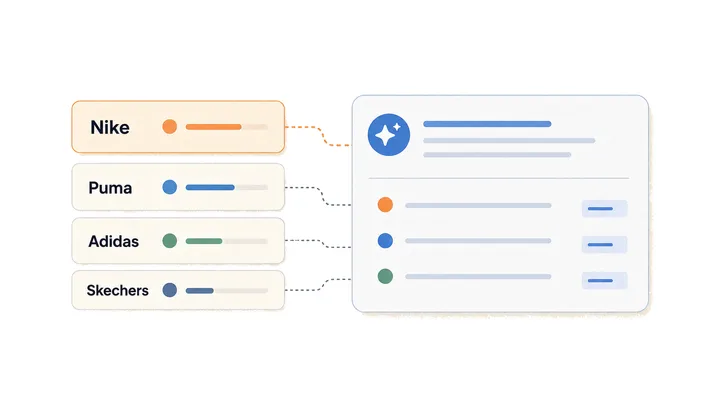
ChatGPT lists three competitors. Your brand is missing. Someone on the team takes a screenshot, drops it into Slack, and the argument starts.
That screenshot is useful. It isn’t enough.
ChatGPT recommendations can vary by prompt wording, web search use, visible sources, timing, region, product knowledge, and the way the question frames the buyer’s need. A brand can be absent from one broad category prompt and present in a narrower use-case prompt. It can appear in a list but not receive a real buying rationale. It can be cited as a source but not recommended as a vendor.
Separate those cases before assigning work.
| Outcome | What it means | First question to ask |
|---|---|---|
| Mentioned | Your brand appears somewhere in the answer | Is the mention accurate and useful? |
| Recommended | Your brand is named as a fit, option, or shortlist choice | Which buyer need does the answer connect you to? |
| Cited | The answer links to your owned page or a third-party source about you | Is that source current, strong, and aligned with positioning? |
| Omitted | Competitors appear and you do not | Which evidence do competitors have that you lack? |
| Misframed | Your brand appears in the wrong category, segment, or use case | Which public source is teaching the wrong story? |
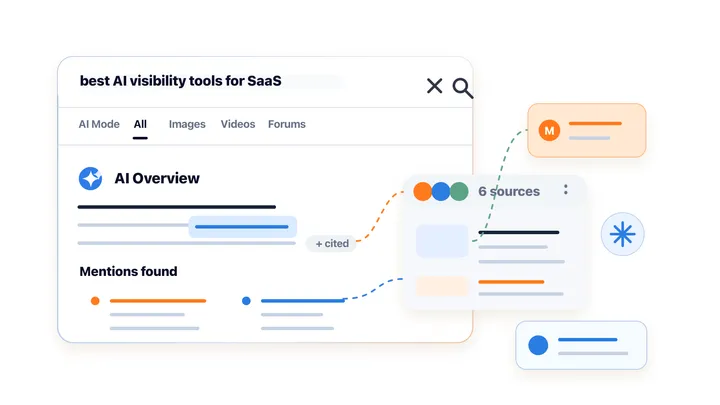
OpenAI’s own ChatGPT search announcement says ChatGPT can provide timely answers with links to web sources and includes a source sidebar for search results. That doesn’t mean every recommendation prompt uses the same source path, but it does mean source quality belongs in the diagnostic workflow.
The hard part is less glamorous than “GEO.” You need to inspect why the answer had enough confidence to recommend someone else.
The five most common reasons your brand is missing
1. Your category is not explicit enough
AI systems are bad at rewarding subtle positioning. If your homepage says “the smarter way to understand growth” but never states the category, buyer, use case, and alternatives, you make the model infer too much.
For a SaaS company, your public pages should make these facts easy to extract:
- Product category
- Target buyer
- Core use cases
- Industries or company sizes served
- Integrations or workflows
- Pricing posture when public
- Strongest alternatives or comparison set
- Proof points and limitations
This isn’t keyword stuffing. It is entity clarity. A product that is clear to an existing sales prospect may still be fuzzy to an answer engine trying to decide whether it belongs in a recommendation list.
2. Competitors have better recommendation-ready pages
ChatGPT recommendations often need short, comparative reasoning: best for agencies, best for enterprise governance, best for a budget-conscious startup, best for a specific integration.
If competitors have clean comparison pages, use-case pages, review profiles, alternatives pages, category guides, and third-party list mentions, they give the system ready-made material. If your site only has feature pages and a broad homepage, you may be present on the web but hard to recommend.
This is where competitor visibility gap analysis is more useful than another generic content brainstorm. Capture which competitors appear, which buyer angle they win, and which sources support the answer.
3. Third-party sources describe you badly or not at all
Owned content matters, but recommendation answers often lean on the wider public source graph: review sites, directories, partner pages, media mentions, marketplace listings, documentation, community threads, and comparison content.
That is not just a hunch. In the 2026 paper How Large Language Models Source Brand Reputation Across Languages and Markets, researchers analyzed more than 167,000 URL-grounded citations for 128 brands and found that 85.7% of citations pointed to domains the brand did not own. For brand visibility work, that means third-party source cleanup is not optional background work. It is part of the answer path.
This creates an ugly gap for quiet B2B brands. You may have a strong product and weak public corroboration.
Look for stale or thin sources:
- Review profiles with an old category
- Directories that use a retired tagline
- Partner pages that mention only one product line
- Old launch posts that outrank current positioning
- Competitor-written comparisons that define the category around their strengths
- Listicles where your brand is missing but weaker competitors appear
The fix isn’t to spam the web with mentions. The fix is to make credible public sources accurate, current, and useful enough that an answer engine has something better to summarize.
4. Search and crawler access is being misunderstood
Some teams block too much by accident, or they confuse training controls with search visibility controls.
OpenAI’s crawler documentation separates different user agents. In particular, it describes OAI-SearchBot as the crawler used to surface websites in ChatGPT search features.
The same documentation says sites opted out of OAI-SearchBot won’t be shown in ChatGPT search answers, though they can still appear as navigational links.
Don’t turn this into a panic project. It is one checklist item, not the whole strategy.
Review robots.txt, CDN bot rules, noindex, redirects, sitemap freshness, blocked documentation paths, JavaScript-only content, and whether the pages that best explain your product are visible as text. If your strongest product proof sits in a gated PDF, a sales deck, an image, or a login-only help center, it may be invisible to the public source path.
5. You are testing prompts that do not match real buyers
Broad prompts are useful for category visibility, but they are not the whole market.
“Best CRM software” and “best CRM for a 40-person B2B SaaS company using HubSpot and needing sales forecasting” are different recommendation jobs. If you only test generic prompts, you’ll miss the narrower cases where you should win.
Build prompt groups around buyer jobs:
- Problem-aware prompts
- Category prompts
- Use-case prompts
- Comparison prompts
- Alternatives prompts
- Branded trust prompts
- Implementation and integration prompts
The AI visibility prompt library is a good starting point. Adapt it to your market, competitor set, ICP, region, language, and must-have features.
Diagnostic matrix: find the real recommendation gap
Use this matrix before assigning content work. It keeps the team from treating every missing mention as “write more blog posts.”
| Symptom in ChatGPT | Likely gap | What to inspect | Priority fix |
|---|---|---|---|
| Competitors appear in broad category prompts; you do not | Category clarity gap | Homepage, title tags, category pages, third-party profiles | Rewrite source-of-truth pages around category, buyer, and use case |
| You appear, but competitors get the buying rationale | Proof gap | Case studies, reviews, integrations, comparison pages, media mentions | Add evidence-rich use-case and comparison content |
| ChatGPT describes an old product or wrong audience | Freshness or entity gap | Review profiles, old launch posts, docs, directories, About page | Correct stale sources and make current positioning explicit |
| The answer cites weak or outdated pages | Source quality gap | Cited URLs, date, ownership, content depth, crawlability | Improve or replace the sources that shape the answer |
| You win branded prompts but disappear from discovery prompts | Demand-capture gap | Problem-aware and category content, alternatives pages, list inclusion | Build pages for the buyer questions before they know your brand |
| Results change wildly between runs | Measurement gap | Prompt wording, platform, model, date, region, repeated samples | Move from screenshots to recurring prompt monitoring |
That last row is the one teams underfund.
One screenshot can start the investigation. It can’t prove a trend, measure share of voice, or show whether a fix worked. Use a benchmark with dates, prompt groups, answer captures, competitor mentions, citations, and notes.
If you need a starting workflow, pair this article with the DIY AI SEO brand audit.
Build a prompt benchmark before rewriting content
The mistake is jumping straight from “ChatGPT omitted us” to “we need ten GEO articles.”
Start with a 30-prompt benchmark for one buyer segment. A B2B SaaS team might use:
- 6 problem-aware prompts
- 6 category prompts
- 6 comparison prompts
- 6 alternatives prompts
- 3 branded trust prompts
- 3 implementation prompts
Run the same set across the answer engines your buyers are likely to use. For this topic, ChatGPT is the trigger, but the pattern should be compared with Perplexity, Gemini, Claude, Copilot, and Google AI features when they matter to your market.
Record these fields:
| Field | Why it matters |
|---|---|
| Date and platform | Recommendations can change over time and by system |
| Prompt text | Small wording changes can change the answer set |
| Brand mention | Shows whether the brand appears at all |
| Recommendation status | Separates a passing mention from a real shortlist |
| Competitors named | Shows who owns the buyer question |
| Cited or visible sources | Points to source gaps and stale evidence |
| Accuracy issues | Finds reputation and positioning risk |
| Next action | Turns the answer into work, not anxiety |
Don’t overbuild this on day one. A spreadsheet is enough for the first pass. The value is the discipline: same prompts, same fields, same cadence.
Then move into recurring AI visibility monitoring when leadership or clients need trend reporting.
Fix the source graph, not just the copy
Once you know where the brand is missing, prioritize fixes by the source path.
Owned source fixes
Update the pages answer engines should be able to understand first:
- Homepage
- Product pages
- Use-case pages
- Comparison and alternative pages
- Pricing page if public
- Docs and integrations
- About page
- FAQ pages
- Top educational content
Each page should answer a specific question cleanly:
- What does the product do?
- Who is it for?
- When is it a good fit?
- When is it not?
- Which competitors or alternatives should a buyer compare?
- What proof supports the claim?
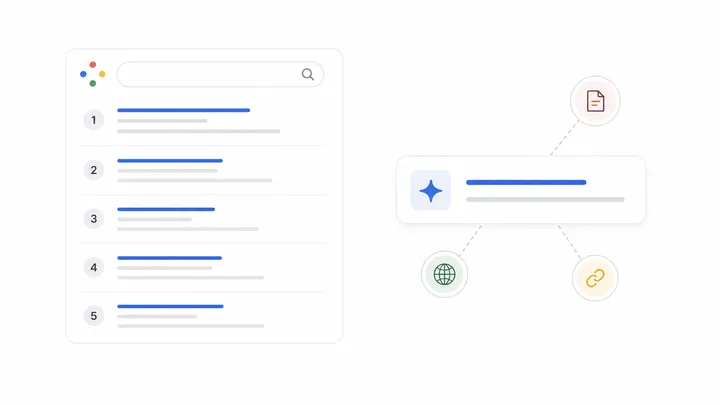
This also helps traditional SEO. Google’s guidance for AI features says foundational SEO best practices remain relevant for AI Overviews and AI Mode, and that pages need to be indexed and eligible for snippets to appear as supporting links.
It also says there is no special schema.org markup required for those AI features.
The practical lesson is boring and useful: crawlable text, clear internal links, accurate structured data, and helpful content still matter.
Third-party source fixes
Create a source cleanup list:
- Which review profiles need correction?
- Which directories use the wrong category?
- Which partner or marketplace pages are thin?
- Which public comparisons exclude you?
- Which old articles still describe a retired product?
- Which community or support threads create misleading impressions?
Not every source can be changed. That’s fine. Prioritize sources that appear in answers, rank for category terms, or are commonly referenced by buyers.
Comparison content fixes
If ChatGPT recommends competitors because it can explain them better, write pages that make fair comparison easier.
Good comparison content is not an attack page. It should explain:
- Who each option is best for
- Where the products differ
- Which workflows each one supports
- What trade-offs a buyer should consider
- What evidence supports the claims
- When your product is not the best fit
This kind of page helps answer engines and buyers for the same reason: it reduces ambiguity.
What not to do when ChatGPT ignores your brand
Don’t treat a missing recommendation like a technical bug you can patch with one trick.
Avoid these moves:
- Prompt-chasing: repeating prompts until the answer says what you want.
- Keyword stuffing: adding “ChatGPT recommendations” to pages without improving evidence.
- Fake authority: creating thin third-party-looking pages that do not help buyers.
- One-platform tunnel vision: assuming ChatGPT represents every AI answer engine.
- Traffic-only reporting: waiting for AI referral traffic to prove a recommendation influence that may show up later as branded search, direct traffic, or sales-call language.
- No owner: assigning “AI visibility” to everyone, which means nobody reruns the benchmark.
The most useful team habit is less exciting: one owner, one prompt set, one recurring report, one prioritized fix list.
What to fix first
Start with the gaps that can change whether a buyer understands or shortlists the brand.
Use this priority order:
- Fix wrong branded answers. If ChatGPT misstates what you do, repair source-of-truth pages and stale public profiles first.
- Fix category absence. If you’re missing from category prompts, clarify category, ICP, use cases, and alternatives on owned pages.
- Fix competitor displacement. If the same competitors keep appearing, inspect their source advantages and build fair comparison content.
- Fix citation weakness. If weak sources shape answers, improve the pages being cited or build stronger replacements.
- Fix measurement. If the team can’t tell whether visibility changed, create a repeatable monitoring cadence.
For reputation issues, use the guide to fix AI misinformation about your brand. For missing competitor shortlists, start with the AI competitor visibility gap prompt.
How AI Brand Scan helps
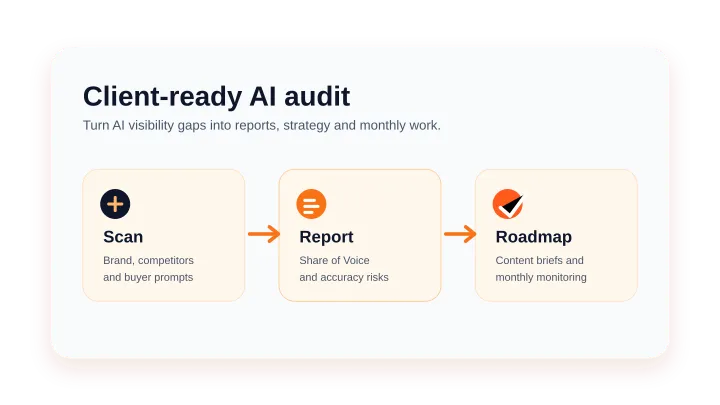
AI Brand Scan turns the “why are we missing?” question into a repeatable audit instead of a Slack argument.
Use it to:
- Scan prompts where buyers ask for tools, comparisons, and recommendations
- Capture whether your brand is mentioned, cited, recommended, omitted, or misdescribed
- Compare competitor visibility across prompt groups
- Inspect source patterns and recommendation gaps
- Turn findings into a GEO content roadmap
- Report movement over time
No tool can guarantee that ChatGPT recommends your brand. The realistic win is better measurement, cleaner evidence, and a content/source strategy tied to observed prompts instead of guesses.
Run an AI visibility audit, then use the results to decide which pages, profiles, and comparison assets deserve the next sprint.
FAQ
Why does ChatGPT recommend my competitors but not my brand?
Usually because the public evidence for competitors is easier to retrieve, compare, and summarize. They may have clearer category pages, stronger third-party mentions, more comparison content, fresher profiles, or better crawlable sources.
Can I force ChatGPT to recommend my brand?
No. You can improve the public evidence around your brand and monitor whether recommendations change, but you cannot guarantee a mention or shortlist position.
Is this the same as SEO?
No, but it overlaps. Traditional SEO focuses on rankings, traffic, indexing, and page performance. AI visibility also looks at generated answers, citations, recommendations, competitors, answer accuracy, and prompt-level measurement.
How many prompts should I test?
Start with 20 to 30 prompts for one buyer segment. Split them across problem-aware, category, comparison, alternative, branded, and implementation prompts. Repeat the same set before claiming improvement.
What is the fastest useful fix?
Run a focused audit first. If branded prompts are wrong, fix source-of-truth pages and stale third-party profiles. If category prompts omit you, improve category clarity and comparison-ready content before publishing more generic blog posts.