DIY AI SEO Brand Audit: Find Your AI Visibility Gaps
- Jowita Chmura
- Ai brand visibility
- Published
- Last updated
- 07 Mins read

A DIY AI SEO brand audit shows whether answer engines mention, cite, recommend, misdescribe, or ignore your brand for prompts buyers might actually use. The mistake is treating one ChatGPT screenshot as evidence; the useful audit is a repeatable prompt benchmark with sources, competitors, and answer quality recorded side by side.
This is not about hacking AI search. It is about finding where your public evidence is too thin, stale, confusing, or competitor-shaped.
[Reality Check]: AI visibility is not a fixed ranking, so your audit should measure patterns across prompts and answer engines, not one lucky or unlucky response.
What a DIY AI SEO brand audit should answer
A proper AI visibility audit should give you five decisions:
- Are we mentioned? Check whether the brand appears in category, use-case, comparison, alternative, and branded prompts.
- Are we described accurately? Look for wrong product categories, old feature claims, outdated pricing language, or vague positioning.
- Are we recommended? Separate a passing mention from a real buyer shortlist recommendation.
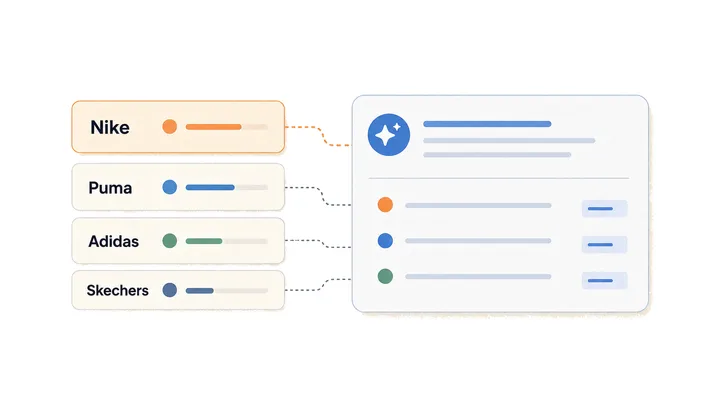
- Who appears instead? Track competitors that displace you or co-own the answer.
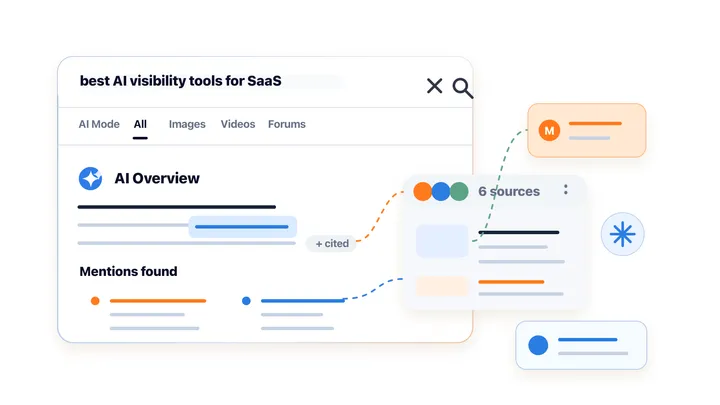
- Which sources shape the answer? Record cited pages, third-party profiles, reviews, listicles, documentation, and your own site pages.
That last point matters. ChatGPT search is built around web answers with links to relevant sources, according to OpenAI’s ChatGPT search announcement. Perplexity describes itself as an answer engine that searches and cites sources in responses, as covered in Perplexity’s product overview. Google has also folded generative AI into Search experiences through AI-powered summaries and follow-up exploration, described in Google’s generative AI Search update.
The practical takeaway: your audit should capture answer text and source behavior. If the answer is wrong but the cited source is old, the fix is different from an answer that cites your homepage but still misunderstands the product.
Before you start: choose the audit scope
Don’t audit every prompt your team can imagine. Start with one market, one product line, and one buyer persona. A SaaS company might choose “US mid-market marketing teams evaluating AI visibility tools.” An agency might choose “B2B SaaS clients asking about AI search reporting.”
Use this minimum setup:
- Answer engines: ChatGPT, Perplexity, Gemini, Claude, Copilot, and Google AI Overviews where available in your market.
- Prompt set: 20 to 30 prompts split across buyer stages.
- Competitors: three to five direct competitors plus any unexpected brands that appear.
- Capture fields: date, platform, prompt, answer summary, brand mention, recommendation status, competitors, citations, source quality, errors, and next action.
- Repeat cadence: run the same prompt set again after fixes. Weekly is enough for most teams; daily manual audits usually create noise before they create insight.
For a faster starting point, use the AI visibility prompt library and adapt the prompts to your category, buyer type, region, and must-have features.
Phase 1: branded answer accuracy
Start with prompts where the answer engine has no excuse to miss the basics:
- “What does [Brand] do?”
- “Who is [Brand] best for?”
- “Is [Brand] a good option for [use case]?”
- “What are the main products from [Brand]?”
- “What are common complaints about [Brand]?”
Score each answer for:
- correct category,
- correct audience,
- current product description,
- outdated or invented claims,
- cited sources,
- tone of confidence,
- missing differentiators.
This is where many teams discover that their homepage positioning is clear to humans who already know the product, but weak for answer engines that need explicit facts. If the answer says you are an agency when you are a SaaS product, the issue may be entity clarity. If it names a retired feature, the issue may be stale third-party sources.
Phase 2: category and buyer-intent prompts
Next, test prompts a real buyer would use before they know which vendor to choose:
- “What are the best [category] tools for [buyer type]?”
- “Which [category] platforms should a [company size] team consider?”
- “I need [product category] for [use case]. What should I evaluate?”
- “What are the best alternatives to [competitor]?”
- “Compare [Brand] with [Competitor] for [use case].”
Don’t only record whether your brand appears. Record the role it plays in the answer.
| Outcome | What it means | Action |
|---|---|---|
| Recommended clearly | The answer names your brand as a fit for the prompt | Preserve the source pattern and monitor changes |
| Mentioned but not recommended | The brand appears, but competitors get the buying rationale | Improve proof, use-case pages, and comparison content |
| Omitted | Competitors appear and you do not | Investigate source gaps, category positioning, and third-party mentions |
| Misframed | The brand appears in the wrong category or segment | Fix entity clarity and outdated descriptions |
| Cited poorly | The answer relies on stale, weak, or competitor-authored sources | Build or correct stronger source pages |
This is the competitor visibility layer. A competitor mention is not just an SEO problem; it is market research. It tells you which vendors answer engines can explain more easily than they can explain you.
For a structured version of this workflow, use the competitor visibility gap analysis use case.
Phase 3: source and citation review
For every answer with citations or named sources, record the source type:
- owned pages,
- help docs,
- pricing or plan pages,
- review sites,
- comparison pages,
- media articles,
- directories,
- community threads,
- competitor content,
- old PDFs, archived pages, or outdated profiles.
Then classify source quality:
- Strong: current, authoritative, neutral or owned by you, and aligned with your positioning.
- Useful but incomplete: credible source, but missing a key product change, market, or use case.
- Risky: old, thin, competitor-owned, user-generated without context, or factually wrong.
Source work is usually the part teams skip because it is less glamorous than “optimize for AI.” It is also where the audit becomes useful. If Perplexity cites a dated review page, your next step may be profile cleanup. If ChatGPT search cites your own page but misses a core differentiator, your page needs clearer answer-ready language.
What not to conclude from one audit
A first pass can show obvious problems, but it should not become a board-slide certainty machine. Treat the findings as a baseline, not a verdict.
Be careful with these conclusions:
- “We are invisible.” Maybe. Or maybe the prompt set missed the language, buyer segment, or use case where you do appear.
- “The competitor owns the category.” A competitor winning five broad prompts is a warning sign. It is not the same as owning every buyer job.
- “We need more blog posts.” Sometimes the fix is a clearer homepage, a stronger comparison page, corrected third-party profiles, or better product proof.
- “The answer engine is wrong, so the channel is useless.” Wrong answers are exactly why monitoring matters. They show which facts need to be easier to verify.
- “One fix worked.” Re-run the same prompts after the change. Then check whether the answer, citations, and competitor set moved together.
The better conclusion is narrower: “For this prompt group, on this date, across these answer engines, here is how the brand was represented and what source gaps showed up.” That sentence is less dramatic. It is also much more useful.
Turn findings into a priority list
After the first pass, sort fixes by business consequence rather than editorial convenience.
High-priority fixes usually include:
- a wrong product category in branded prompts,
- a competitor repeatedly recommended for your strongest use case,
- an outdated source that appears in several answers,
- a missing comparison page for a common alternative prompt,
- unclear positioning on the page answer engines already cite.
Lower-priority fixes include wording preferences, isolated one-off answers, and prompts that do not map to a real buyer decision. Those can go into a backlog. The first sprint should focus on gaps that could change whether a buyer understands, trusts, or shortlists the brand.
Phase 4: AI-readability and GEO fixes
Now inspect the pages answer engines should understand first: homepage, product pages, pricing page, comparison pages, about page, docs, FAQ, and top-performing educational content.
Look for these gaps:
- vague hero copy that never states the product category,
- missing “who it is for” language,
- no comparison or alternative pages,
- no clear FAQ answers for buyer objections,
- inconsistent product names across site, profiles, and docs,
- old screenshots or claims that conflict with current positioning,
- thin third-party evidence around reviews, integrations, or use cases.
Good GEO work does not mean stuffing “AI SEO” into every paragraph. It means making the brand easier to retrieve, cite, compare, and explain. Use the audit findings to update pages that answer engines are likely to summarize: direct definitions, short product descriptions, use-case pages, comparison tables, clear limitations, and current proof.
If your audit finds inaccurate descriptions, pair this workflow with the guide on how to fix AI misinformation about your brand.
[Audit Checklist]: score your AI visibility baseline
Use this scorecard for the first pass. Keep the notes short. You want a baseline you can repeat, not a novel.
| Audit item | Score |
|---|---|
| Brand description is accurate across major answer engines | 0-10 |
| Brand appears in relevant category prompts | 0-10 |
| Brand appears in buyer-intent shortlist prompts | 0-10 |
| Competitor mentions are understood and logged | 0-10 |
| Cited sources are current and credible | 0-10 |
| No major outdated, invented, or misleading claims appear | 0-10 |
| Key pages state category, audience, use cases, and proof clearly | 0-10 |
| Prompt set can be repeated for monitoring | 0-10 |
| Next actions are tied to observed prompts and sources | 0-10 |
| Internal owner and review cadence are assigned | 0-10 |
Interpret the total like this:
- 80-100: Strong baseline. Move to recurring prompt monitoring and source maintenance.
- 60-79: Usable but uneven. Prioritize the prompts tied to revenue, comparisons, and reputation risk.
- 40-59: Material visibility gap. Fix entity clarity, source quality, and competitor displacement before scaling content.
- Below 40: Treat this as a brand monitoring issue, not a content polish task.
When DIY stops being enough
Manual audits are useful for diagnosis. They are bad at trend reporting.
Move beyond DIY when:
- you need recurring reports for leadership or clients,
- you monitor several products, markets, or languages,
- competitors change often in the answer set,
- sales teams hear AI-generated objections from buyers,
- you need to compare prompts over time instead of collecting screenshots,
- source and citation changes matter as much as mention presence.
This is where AI SEO monitoring becomes more useful than another spreadsheet. The goal is not to automate anxiety. The goal is to see which prompts changed, which competitors gained ground, which sources moved, and which fixes are worth doing next.
What to do after the audit
Turn the audit into a short action plan:
- Fix factual errors on your source-of-truth pages.
- Update stale third-party profiles and review pages where you have access.
- Add clear answers for category, use case, pricing posture, integrations, and common objections.
- Build comparison or alternative content where competitors are repeatedly recommended.
- Re-run the same prompt set and record what changed.
- Move recurring checks into a monitoring workflow.
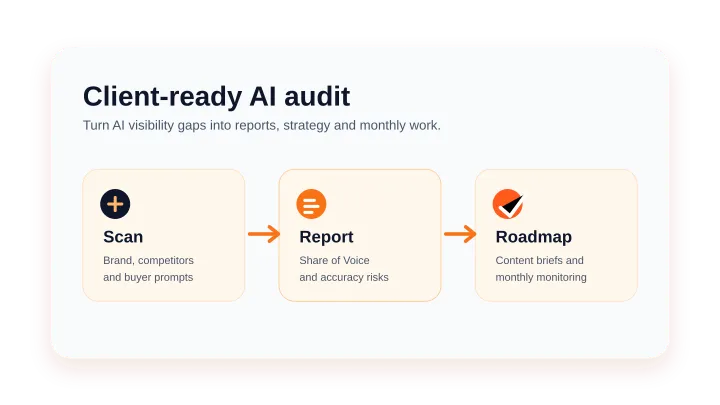
If you want a faster path, run an AI brand visibility audit prompt first, then use AI Brand Scan to turn the findings into repeatable monitoring, competitor tracking, and a GEO content roadmap.
FAQ
Is a DIY AI SEO brand audit the same as traditional SEO?
No. Traditional SEO looks at rankings, traffic, technical health, and search-result visibility. A DIY AI SEO brand audit looks at generated answers: whether your brand is mentioned, cited, recommended, compared accurately, or displaced by competitors.
How often should I repeat the audit?
Repeat the same prompt set after major page updates, product changes, PR campaigns, or competitor launches. For normal monitoring, weekly or monthly checks are usually more useful than one-off screenshots.
Can this guarantee better AI visibility?
No. No audit can force an answer engine to mention your brand. It can show where your brand is missing, where the sources are weak, and which fixes are most likely to make the correct information easier to find.