AI Search Visibility vs SEO Rankings: What's the Difference?
- Jowita Chmura
- Ai brand visibility
- Published
- 08 Mins read
AI Search Visibility vs SEO Rankings: The Difference That Matters
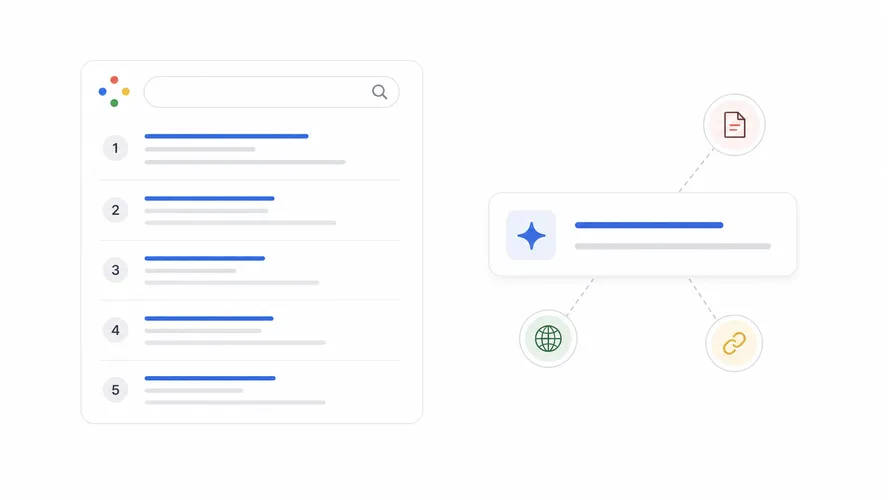
Teams should use SEO rankings to monitor page discovery and AI search visibility to monitor brand mentions, citations, recommendations, omissions, and competitor framing inside generated answers. The risk is clear: a page can rank well while the brand still disappears from the AI shortlist a buyer sees first.
The problem is not that SEO stopped working. The problem is that rankings, citations, recommendations, and answer accuracy are different measurement surfaces.
[Reality Check]: If leadership asks, “Are we visible in AI search?” a rank-tracking dashboard cannot answer the question by itself.
Key takeaways
- SEO rankings show where pages appear for specific search queries.
- AI search visibility shows how a brand appears inside generated answers, recommendations, comparisons, citations, and omissions.
- Classic SEO still matters because crawlable, useful, well-linked content can support both search results and AI answer surfaces.
- AI visibility needs prompt monitoring, source tracking, competitor visibility, and answer accuracy checks.
- The useful report is not “SEO or AI.” It is one view that shows rankings, clicks, prompt mentions, citations, recommendation share, and competitor displacement side by side.
The short version
SEO rankings are page-level signals. They tell you whether a URL appears in a search result for a query, roughly where it appears, and how that visibility turns into impressions, clicks, and conversions.
AI search visibility is brand-level and answer-level. It tells you whether an answer engine names your brand, cites your content, recommends you for a use case, compares you fairly with competitors, or leaves you out.
For an SEO lead, the simplest way to explain it is this:
| Question | SEO ranking answers | AI search visibility answers |
|---|---|---|
| Can buyers find our page in search? | Yes | Not directly |
| Does an answer engine mention our brand? | Not reliably | Yes |
| Are competitors recommended instead of us? | Only indirectly | Yes |
| Which sources shape the answer? | Partly, through SERP and backlink analysis | Yes, when citations or source patterns are captured |
| Is the brand described accurately? | Not the main metric | Yes |
| Can we report movement over time? | Yes | Yes, but only with repeatable prompt sets |
That is why AI Brand Scan treats AI search visibility as an additional monitoring layer, not a replacement for SEO.
What SEO rankings actually measure
SEO rankings measure page visibility in search results. A rank tracker or Search Console workflow usually cares about keywords, URLs, positions, impressions, clicks, click-through rate, and conversions.
Google’s SEO Starter Guide describes SEO as helping search engines understand content and helping users find a site through search. That is still a good definition.
For a B2B SaaS team, SEO rankings are useful when you need to know:
- which product, comparison, and educational pages appear for target queries;
- whether content changes improved search visibility;
- which pages attract qualified organic traffic;
- where technical issues may block crawling, indexing, or snippets;
- which topics deserve content updates, internal links, or consolidation.
Keep this work.
SEO rankings are still the base layer. If Google cannot crawl your product pages, if your comparison content is thin, if your internal links are messy, or if your category pages never say what the product does, AI visibility work starts with a weak public source graph.
The mistake is expecting ranking reports to explain generated answers.
What AI search visibility measures
AI search visibility measures whether and how your brand appears in AI-generated answers for prompts that matter to buyers.
The useful outcomes are more granular than “visible” or “not visible”:
- Mentioned: The answer names your brand.
- Cited: The answer links to your owned page or a third-party source about you.
- Recommended: The answer includes your brand in a shortlist or “best for” response.
- Compared: The answer explains you against alternatives or competitors.
- Accurately described: The answer gets your category, audience, features, use cases, and limitations right.
- Omitted: Competitors appear, but your brand does not.
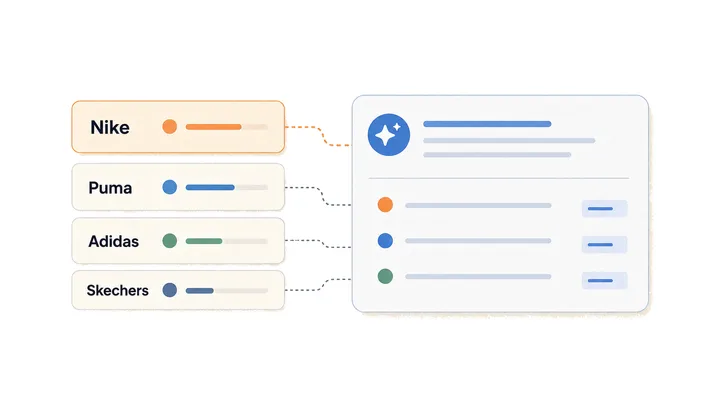
- Displaced: A competitor is recommended in a prompt where your brand should be a natural fit.
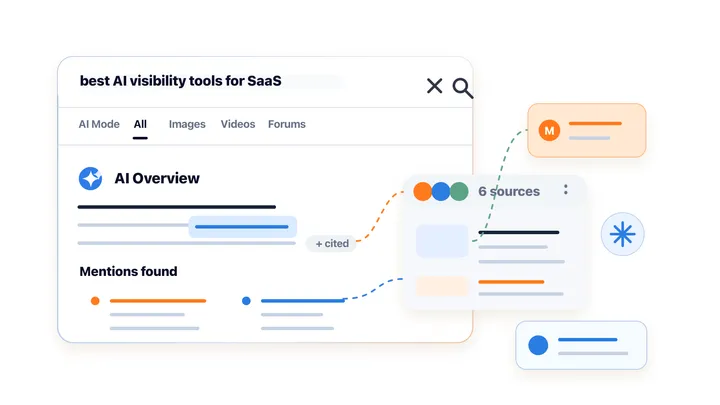
OpenAI’s ChatGPT search announcement is a useful source-layer example: ChatGPT search can provide timely answers with links to relevant web sources and a Sources sidebar. That does not mean every ChatGPT answer behaves like a search result. It means some AI answer experiences now expose sources in ways marketers can monitor.
Google’s AI features guidance gives another guardrail: to appear as a supporting link in AI Overviews or AI Mode, a page needs to be indexed and eligible for Google Search with a snippet. Google also says there are no additional technical requirements for those supporting links.
The practical takeaway is not “ignore SEO.” It is the opposite.
SEO helps build the accessible source layer. AI visibility monitoring checks whether that source layer is actually showing up in generated answers.
[Diagnostic Matrix]: which metric should you use?
Use this matrix when a stakeholder asks whether SEO rankings or AI search visibility should own a question.
| Business question | Use SEO rankings | Use AI search visibility | What to do next |
|---|---|---|---|
| ”Do we rank for this commercial query?” | Yes | Maybe | Check rankings, Search Console, page intent, and conversion data |
| ”Does ChatGPT recommend us for this buyer use case?” | No | Yes | Run a prompt benchmark and capture mentions, competitors, and citations |
| ”Why did traffic drop?” | Yes | Maybe | Start with Search Console and analytics, then check AI answer surfaces if the query is answer-heavy |
| ”Are competitors owning the category narrative?” | Partly | Yes | Compare prompt answers, source patterns, and competitor framing |
| ”Is our brand description accurate?” | No | Yes | Test branded prompts and fix stale owned or third-party sources |
| ”Which page should we update first?” | Yes | Yes | Prioritize pages that rank, receive impressions, or appear in AI citations with weak answer quality |
| ”Can we prove GEO work changed revenue?” | Partly | Not alone | Report prompt movement, traffic, conversions, and sales feedback without claiming clean causality |
Short version: use SEO rankings for page discovery and traffic diagnostics. Use AI search visibility for answer presence, brand framing, citations, competitors, and recommendations.
Use both when the decision is about what to publish next.
The deep dive: why AI visibility is not a fixed rank
The biggest reporting mistake is turning AI search visibility into a fake ranking metric.
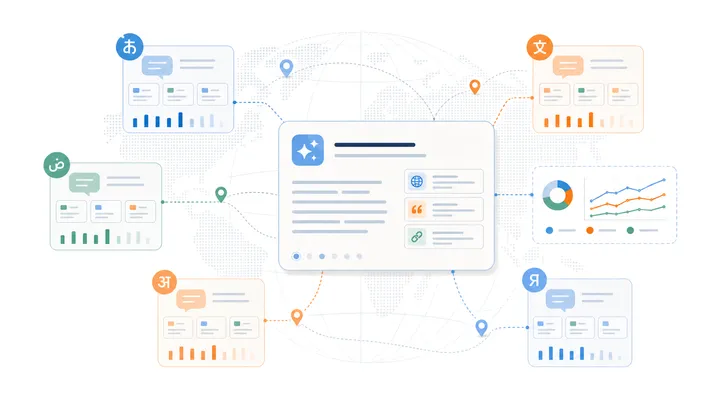
AI answers can vary by platform, model, time, query wording, location, source availability, and whether the answer engine decides to retrieve fresh web sources. One answer can cite your page. Another can mention a competitor. A third can summarize the category without naming any vendor.
That is annoying.
It is also measurable if you design the benchmark correctly.
Start with prompt groups, not keywords alone:
- Problem prompts: “How can I monitor whether AI answers mention my SaaS brand?”
- Category prompts: “Best AI search visibility tools for B2B SaaS teams.”
- Comparison prompts: “AI Brand Scan vs other AI brand monitoring tools.”
- Alternative prompts: “Alternatives to manual AI visibility audits.”
- Branded prompts: “What does [brand] do, and who is it best for?”
- Trust prompts: “Is [brand] good for agency reporting?”
Then capture the same fields every time:
| Field | Why it matters |
|---|---|
| Platform and date | Prevents one answer from becoming timeless evidence |
| Prompt text | Small wording changes can change the answer set |
| Brand mention | Shows whether the brand appears at all |
| Recommendation status | Separates a passing mention from a real shortlist position |
| Citation or source | Shows which owned or third-party pages may shape the answer |
| Competitors | Reveals category ownership and displacement |
| Accuracy | Flags wrong positioning, stale product facts, or invented claims |
| Next action | Turns observation into a content, source, or entity fix |
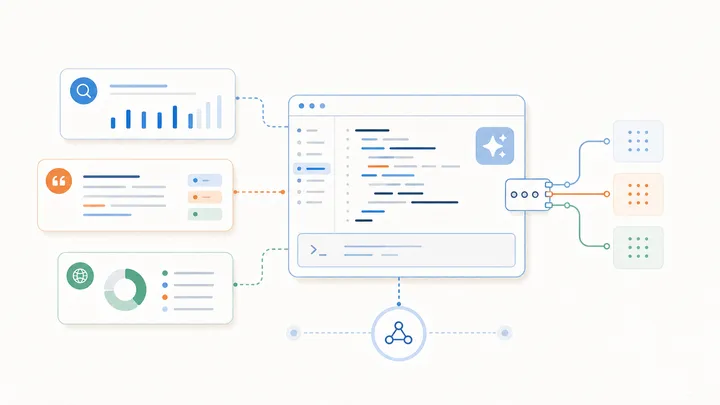
This is the measurement layer behind generative engine optimization, or GEO. The point is not to force an AI system to say your name. The point is to monitor answer patterns and improve the public evidence that makes your brand easier to understand, cite, and recommend.
That is why the SEO vs generative engine optimization split matters. SEO keeps your pages discoverable. GEO adds prompt-level evidence about how those pages and sources show up in generated answers.
Where SEO rankings and AI visibility overlap
SEO and AI search visibility are not enemies. They share a lot of underlying work.
Strong SEO can support AI visibility when it improves:
- crawlability and indexability;
- clear product and category language;
- internal links between related pages;
- direct answers to buyer questions;
- structured content such as FAQs, comparison tables, and definitions;
- source credibility through useful owned and third-party pages;
- fresh pages that reflect current product positioning.
Google’s AI features guidance is blunt on the technical side: existing SEO fundamentals continue to be worthwhile for AI Overviews and AI Mode. That includes crawl access, internal links, textual content, page experience, and structured data that matches visible page text.
In plain English: do not create an “AI SEO” project before your normal SEO basics are sane.
But overlap is not sameness.
A page can rank and still fail inside AI answers. Maybe it ranks for “AI brand monitoring” but does not explain who the product is best for. Maybe it gets clicks, but answer engines cite a third-party directory instead. Maybe the page is strong for search intent, but weak for recommendation intent.
That gap is where AI Brand Scan fits: run the prompt benchmark, compare sources, and turn the findings into content priorities instead of guessing.
What classic SEO reports miss
A standard SEO report usually misses five things that matter in AI-generated answers.
First, it does not show whether your brand was recommended. A ranking for a guide is not the same as inclusion in a buyer shortlist.
Second, it does not show answer wording. AI systems can flatten your differentiation, describe an old product, or put you in the wrong category.
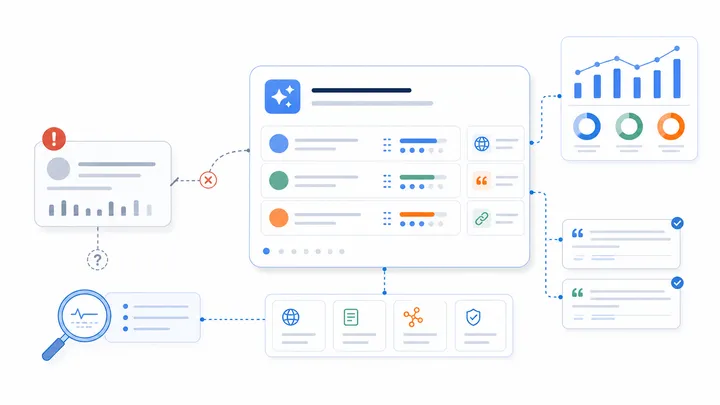
Third, it does not show competitor displacement. If an answer recommends three competitors and omits your brand, a rank tracker may not flag the problem.
Fourth, it does not show citation quality across answer engines. A generated answer may cite your homepage, a competitor page, a review site, a directory, or no visible source at all.
Fifth, it does not show prompt variance. One screenshot can make a team overreact. A repeated prompt set can show whether the pattern is persistent.
This is why a DIY AI SEO brand audit should sit beside SEO reporting. It gives the team a first read on mentions, citations, answer accuracy, and competitor presence before investing in a larger GEO roadmap.
How to report both without confusing leadership
Don’t put every metric into one giant dashboard. Use a two-layer report.
Layer one is classic SEO:
- priority keywords;
- ranking movement;
- impressions and clicks;
- pages gaining or losing visibility;
- conversion impact where attribution is clean enough;
- technical issues that block discovery.
Layer two is AI visibility:
- prompt groups tested;
- brand mention rate;
- recommendation share;
- citation and source patterns;
- competitor displacement;
- answer accuracy problems;
- fixes published since the last report.
The language matters. Avoid saying, “We rank number two in ChatGPT.” Say, “Across 30 category and comparison prompts, the brand was mentioned in 11 answers, recommended in four, cited twice, and displaced by Competitor A in six.”
That sentence is less flashy. It’s much more useful.
For recurring work, connect the report to AI SEO monitoring so the team can compare answer snapshots over time instead of collecting random screenshots.
What to do next
If you already have SEO reporting, keep it. Then add a small AI visibility benchmark for one product category or buyer segment.
Start with 20 to 30 prompts. Include problem, category, comparison, alternative, branded, and trust questions. Run them across the answer engines your buyers may use. Capture mentions, recommendations, citations, competitors, and wrong claims.
Then decide what kind of fix you need:
- Ranking gap: improve the page, intent match, internal links, or technical SEO.
- Mention gap: clarify category, use case, and entity signals.
- Citation gap: strengthen source-worthy owned pages and third-party profiles.
- Recommendation gap: add proof, comparison content, use-case pages, and buyer-specific evidence.
- Accuracy gap: fix stale descriptions on your site and public sources.
- Reporting gap: assign an owner and rerun the same prompt set on a fixed cadence.
Use the AI brand visibility audit prompt for the first benchmark. If the work needs to become a recurring workflow, use AI visibility monitoring for B2B SaaS to track brand mentions, competitors, citations, and answer accuracy over time.
The goal isn’t to replace SEO rankings.
The goal is to stop asking SEO rankings to answer a question they were not built to answer.
FAQ
What is the main difference between AI search visibility and SEO rankings?
SEO rankings measure where pages appear in search results. AI search visibility measures whether answer engines mention, cite, recommend, compare, or omit a brand in generated answers.
Does AI search visibility replace SEO?
No. SEO remains the foundation for crawlable, useful, discoverable content. AI search visibility adds prompt monitoring, citation review, competitor tracking, and answer accuracy checks.
Can a brand rank well in Google but be invisible in AI answers?
Yes. A page can rank for a keyword while the brand is absent from AI-generated recommendations or comparisons. That can happen when the brand’s source evidence, category clarity, or comparison coverage is weaker than competitors.
What should I measure first?
Start with a small prompt benchmark. Track whether your brand is mentioned, cited, recommended, accurately described, or displaced by competitors. Then compare those findings with SEO ranking and Search Console data.
How often should teams monitor AI search visibility?
Weekly or monthly is enough for most teams. The cadence matters less than repeatability: use the same prompt set, capture dates and platforms, and compare movement over time.